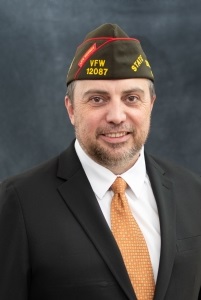
Heath Silcox
Chief of Staff - Army
2026-2027 Dept of Utah, Chief of Staff
2026-2027 Dept of Utah, Chief of Staff
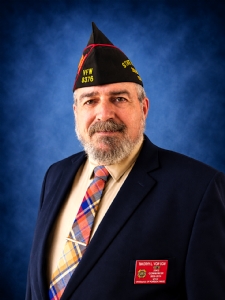
Commander Timothy Von Bon
As members of the Veterans of Foreign Wars, we share a bond that extends far beyond our membership cards, our Posts, our Districts, or the positions we may hold. We are united by our service to our nation, our commitment to our fellow veterans, and the solemn obligations we accepted when we became members of this great organization.
I would like to take a moment to remind each of us, myself included, of the importance of unselfish comradeship, loyalty, mutual respect, and the principles upon which the Veterans of Foreign Wars was founded.
Throughout our lives, both inside and outside the VFW, we will encounter differences of opinion, conflicting personalities, misunderstandings, and disagreements. These are simply part of human nature. However, we must never allow petty jealousies, personal grievances, bruised egos, or trivial personality conflicts to dictate our actions, influence our judgment, or diminish the respect we owe one another.
We do not have to agree on everything to stand together for something greater than ourselves.
Each of us once raised our right hand and swore an oath to support and defend the Constitution of the United States. That oath did not expire when we took off our uniforms. Likewise, our obligations as members of the VFW do not end when we leave a meeting, remove our VFW caps, or walk out the doors of our Posts.
We have pledged ourselves to the principles of unselfish comradeship and loyalty — loyalty to our organization, loyalty to the government of the United States of America, and, perhaps most importantly, loyalty to one another.
Loyalty does not mean we must always agree. Comradeship does not mean we will never disagree. Rather, it means that when disagreements arise, we address them with dignity, honesty, fairness, and respect. It means placing the welfare of our fellow veterans and the good of the organization above personal ambitions, individual recognition, or the desire to prove someone else wrong.
Passion for serving others is one of the greatest strengths of our organization. We should never discourage a Comrade whose heart is dedicated to helping veterans, their families, or our communities. However, even the most honorable intentions can sometimes become overwhelming to those around us. When our enthusiasm, determination, or desire to help begins to overshadow the feelings, perspectives, or contributions of others, we owe it to ourselves and our fellow Comrades to step back and reflect. We should ask whether our approach is bringing people together or unintentionally creating distance between friends.
Our passion for service should never come at the expense of the friendships, mutual respect, and bonds of comradeship that make our organization strong. Sometimes, the greatest demonstration of leadership and friendship is knowing when to listen, when to give others room to contribute, and when to recognize that good intentions alone do not always guarantee a positive impact.
Equally important is our responsibility to respect the established structure of communication within our organization. The VFW has a chain of command and designated channels of communication for good reason. These procedures are not intended to discourage participation, restrict enthusiasm, or diminish anyone's contributions. Rather, they help ensure that information is accurate, appropriately distributed, and communicated in a manner that respects every member.
Whether sharing announcements, commemorating significant events, distributing photographs, or communicating matters of official VFW business, we should be mindful of how, when, and to whom information is sent. A message intended for the membership should ordinarily be routed through the appropriate Post, District, or Department officers, including the Adjutant when appropriate, rather than selectively distributed through personal text threads, group messages, or emails that bypass established communication procedures. This helps ensure that all intended recipients have an opportunity to receive the information, rather than only a chosen few.
We must also respect the personal boundaries of our fellow Comrades. If someone has requested that they not be contacted directly, that request should be honored. When legitimate VFW business requires information to reach that individual, the appropriate designated officer or established communication channel should be used. Our desire to share information, however well-intentioned, does not supersede another member's reasonable request for personal boundaries.
Likewise, when a communication is questioned, redirected through proper channels, or someone is reminded of an established procedure, we should not immediately interpret that correction as a personal attack, rejection, or criticism of our intentions. Not every disagreement is an insult, and not every correction is a confrontation. We should resist the temptation to take offense, assign blame, or draw others into an unnecessary dispute.
Sometimes, being a good Comrade means accepting a simple correction with the same grace and respect with which we would hope to receive one ourselves.
The chain of command and our established communication procedures deserve our respect, but so do the individuals who serve within them. We should neither use these procedures to silence others nor disregard them simply because we believe our intentions justify doing so. Proper communication, mutual courtesy, and personal accountability must work together.
We should never forget that the person sitting across the table from us, regardless of their opinions or personality, is a fellow veteran who also answered our nation's call to serve. Their sacrifices, experiences, and commitment deserve the same consideration and respect we expect for ourselves.
Our organization faces challenges far greater than personal disagreements. Veterans need our advocacy. Our communities need our service. Our Posts need our participation. And future generations of veterans need an organization that remains strong, united, and worthy of their trust.
We cannot effectively serve others if we allow ourselves to become divided among ourselves.
I ask every member, from our newest recruit to our most senior Past Department Commander, to reflect upon the obligations we have undertaken. Before speaking in anger, passing judgment, spreading rumors, circumventing established procedures, or allowing personal feelings to influence our decisions, ask yourself a few simple questions:
Are my words and actions strengthening the bonds of comradeship, or am I allowing personal differences to weaken the organization I have pledged to support?
Am I respecting the established channels of communication and the personal boundaries of my fellow Comrades?
Am I acting for the benefit of the organization and its members, or am I allowing my personal feelings to overshadow our shared mission?
Remember, the VFW is not about any one individual, title, position, or personality. It is about our shared mission, our continued service, and the veterans and families who depend upon us.
Let us lead by example, extend grace when appropriate, offer forgiveness when possible, and always remember that respect is not a privilege reserved for those with whom we agree.
We served together in defense of our nation. We should be able to stand together in service to our fellow veterans.
Thank you for your continued dedication to the Veterans of Foreign Wars, the Department of Utah, and, most importantly, to one another.
United in Service, Strengthened by Comradeship, and Bound by Loyalty.
